
Measles is something most of us haven’t thought about in years, but suddenly, it's making headlines again. Cases are popping up across the country, and with the vastness and density of California, our communities are no exception. Just this year, the state has already reported multiple confirmed cases, adding to a nationwide total of over 300 cases.
“We can and have prevented the spread of measles in our communities with the measles, mumps and rubella (MMR) immunization. I urge all Californians, and anyone in the United States for that matter, to consult with their physicians if they have not yet received protection. The measles outbreak is a reminder of how important vaccination is for public health — on an individual and community level,” said Ravi Kavasery, MD, chief medical officer for Blue Shield of California.
“Measles is a highly contagious virus that causes fever, cough, red eyes and a telltale rash. But it’s not a mild illness — it can lead to serious complications like pneumonia, brain swelling and even death, especially in young children and people with weakened immune systems.”
How is measles transmitted?
The measles virus spreads through respiratory droplets when an infected person coughs or sneezes. It can remain viable in the air and on surfaces for up to two hours, making it exceptionally contagious. Approximately 90% of susceptible individuals (those who are unvaccinated or have not had measles before) will contract the disease if exposed.
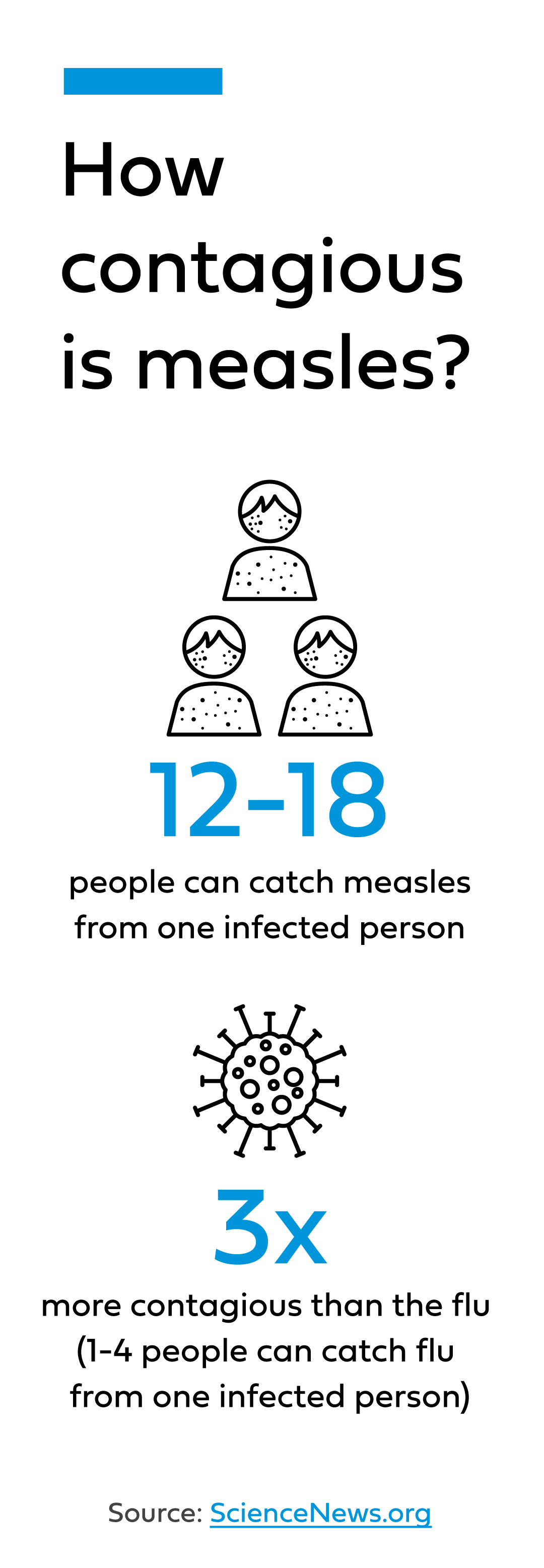
For all infectious disease, infection rates are recorded. And for measles, it is reported that one person can infect 12-18 other people. In contrast, someone experiencing the flu can infect 1-4 other people.
Who is most at-risk?
Unvaccinated individuals are at the highest risk of contracting measles. This includes infants under 12 months who are too young to receive the vaccine, individuals with compromised immune systems and those who have not received the recommended two doses of the measles, mumps and rubella (MMR) vaccine. According to the Texas Department of State Health Services, 277 out of 279 measles cases in the recent outbreak were among unvaccinated individuals.

What can I do to protect myself and my loved ones?
Vaccination is the most effective way to prevent measles. The MMR vaccine is about 93% effective after one dose and 97% effective after two doses. The Centers for Disease Control and Prevention (CDC) recommends that children receive the first dose at 12-15 months and the second dose at 4-6 years. Adults who are unsure of their vaccination status should consult their healthcare provider.
Are there any side effects of the measles, mumps and rubella vaccine?
The MMR vaccine is considered safe and effective. Most side effects are mild, such as soreness at the injection site, fever or mild rash. Serious side effects are rare.
Dr. Kavasery emphasized, "The MMR vaccine is crucial to avoiding this potentially deadly disease. The benefits of vaccination far outweigh the risks, especially considering the potential severity of measles infection.”
What should I do if I think I've been exposed to measles?
If you believe you've been exposed to measles, especially if you're unvaccinated or at high risk of complications, contact your healthcare provider immediately. They can assess your risk and determine if you need post-exposure prophylaxis, such as the MMR vaccine (if given within 72 hours of exposure) or immune globulin.
It's essential to call ahead before visiting a healthcare facility to prevent potential spread.
“The recent measles outbreak is alarming and can be used as a wake-up call,” said Dr. Kavasery. “Staying informed, getting vaccinated and taking precautions can help protect you, your loved ones and your community — it's what we tell family, friends and patients in the clinics I spend time in.”
Resources
- Centers for Disease Control: For Parents: Vaccines for Your Children (vaccines by ages)
- Blue Shield of California: Information on immunizations