
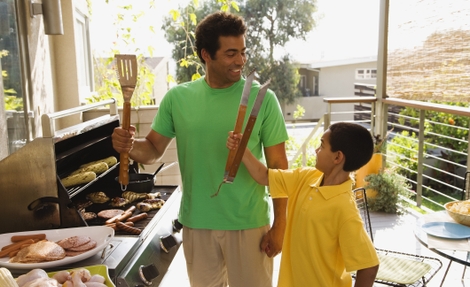
Summer is here, and a milestone of this warm season is cooking outdoors on a grill. Whether in your backyard or at a local park, the BBQ can also be a fun and healthy way to get some nutrients in while spending time outdoors.
“Grilling is a fantastic way to get fresh air and bring community together,” said Angie Kalousek Ebrahimi, director of Lifestyle Medicine at Blue Shield of California. “Planning ahead of time can make a huge difference in the nutritional quality of your meals and allow you to stay safe while you grill.”
Kalousek Ebrahimi shares five food swaps for the BBQ, and five safety tips to guide your summer fun.
Five food swaps:
-
Swap out beef burgers for mushroom or turkey patties. Portobello mushrooms have a rich, meaty texture perfect for a burger substitute. Marinated and grilled, these provide a lot of flavor with less calories and less fat. Turkey burgers also provide a healthier and leaner alternative to beef.

-
Try chicken or vegetable-based sausages, instead of pork. Pork can be high in saturated fat — chicken or vegetable options provide a healthier alternative.
-
Grill vegetables as a side or main dish. Summer favorites like corn, onions, peppers and zucchini make for a delicious side or main dish. These can be tossed into a salad or made on skewers for an even easier serving option.
-
Consider grilling seafood instead of red meat. Salmon, shrimp and tuna steaks are all fantastic red meat alternatives, and are chock-full of omega-3 fatty acids, which are good for your heart.
-
Think outside the bun, looking to lettuce-wrapped or whole-grain options. Wrapping grilled items in large romaine or butter lettuce helps to cut down on carbs. If you want to stick with a bun, try a whole-grain bun for added fiber.
Five safety tips:
-
Make sure your grill location is safe. Grills should be kept at least 10 feet away from buildings, decks and branches. Placing the grill on a flat and stable surface will also help prevent tipping.
-
Think about your fuel source. Propane grills are healthier than charcoal — both for the environment and for you. Propane emits fewer air pollutants than coal and is more efficient. Coal also carries the risk of burning or blackening foods, which carries additional health risks.
-
Clean your grill regularly. Cleaning grates and grease traps helps to prevent grease fires and flare-ups, further ensuring a safe grill.
-
Never leave a grill unattended. Make sure an adult always has eyes on the grill — between cooking highly flammable food like meat, and the high heat during the summer, fires can start easily.
-
Don’t forget to take care of yourself. Wear sunscreen with SPF 30 or higher if grilling in direct sunlight, plus a hat and glasses to protect your face and eyes – and remember to drink plenty of water to avoid overheating.
“If you’re looking to grill but don’t have the yard space, see if your local public park or recreation department offers spaces with free or low-cost grill stations,” said Kalousek Ebrahimi. “With a little creativity and planning, any summer day can turn into a fun and safe celebration with healthy and delicious food.”
For more, check out these stories: