
by Dr. Nicole Stelter, director of Clinical Program Management
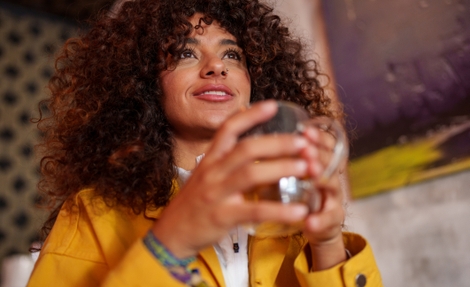
After the holiday season, many of us look to reset our drinking habits, often called Dry January. This aligns with the growing sober curious movement year-round — a conscious choice to cut back on or abstain from alcohol entirely — keeping in mind the effects of alcohol on health and well-being.
As a whole, Gen Z youth are increasingly drinking less from the start. More than 1 in every 4 college students in the U.S. (28%) reported abstaining from alcohol, according to a study in the Journal of the American Medical Association.
Reducing alcohol intake has quite a few health benefits, including better sleep quality, lower blood pressure, weight loss, increased energy and stronger immune function.
Below are 5 ways to reduce or eliminate alcohol consumption:
-
Try a time-limited sober period, like Dry January, or certain sober days of the week. Dry January is a popular challenge used to reduce alcohol intake. The guidelines are simple: for the entire month, don’t consume any alcohol. It is a crowd-sourced way to kick off the year with healthier habits, knowing that others are doing the same. But what’s stopping you from making any month your start? You can pick any month of the year — the important part is the attempt to be healthier. If a full month seems too intimidating, try selecting a few days of the week to avoid alcohol. Workdays will be easier than weekends, so Monday through Thursday could be a great place to start. This still allows you to have some flexibility and not feel overwhelmed by your new commitment.
-
Test out fun, alcohol-free drinks like mocktails. Alcohol-free drinks are increasingly easier to find at stores, restaurants and bars. Next time you’re about to purchase an alcoholic beverage, order a mocktail or club soda instead. You may find the placebo effect stronger than you think.
-
Replace old habits with new ones — go on a walk after work instead of winding down with a glass. Habits can be hard to break, so why not replace one instead? If you’re used to winding down with a glass of wine after a long day, try a healthier alternative. Pick up a book or go outside for a nice walk to keep busy and build a new habit.
-
Prepare for social situations with community inside and outside of your circle. Since alcohol is incorporated into many social settings, people may ask (inappropriately!), "Why aren't you drinking?” Preparing an answer you're comfortable with can make these interactions easier, like, "Oh, I'm just not drinking right now." Being ready to politely decline can also be helpful. Having people around you who are sober or limit their drinking can also encourage your sober exploration — you may be surprised to find someone in your life who has the same curiosity. If not, there are also groups online and through community centers that can help with support in this new chapter.
-
Practice mindfulness and intentional living. For some, drinking alcohol just feels like a natural part of life and a familiar habit that fills time in the day. The next time you feel the urge to reach for a drink, consider slowing down to pause, reflect and consider alternatives that could benefit your well-being. Mindfulness and intentional living are at the heart of the sober curious movement. Getting intentional about why you drink — without judgment — will help you understand what genuinely makes you feel good and aligns with who you really are.
Resources
- For mindfulness and meditation tips, most Blue Shield members have access at no additional cost to the Headspace app through Wellvolution, Blue Shield's digital lifestyle platform.
- The Alcohol Topic Center on CredibleMind has tips on how to form a healthier relationship with alcohol.
- If you think your alcohol use may be harmful, consider taking this self-assessment.
- If you or someone you know if worried about alcohol or other substance use, call the Substance Abuse and Mental Health Services Administration (SAMHSA) National Helpline at 800-662-4357 for free, confidential, 24/7 support.